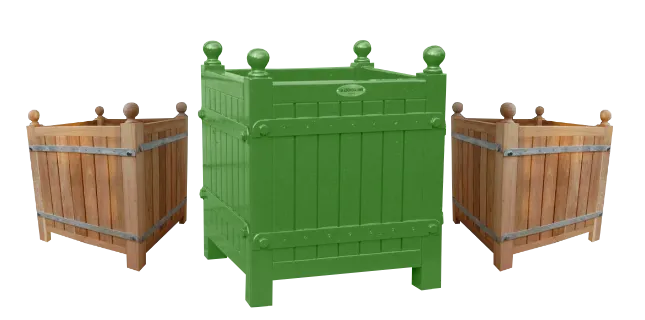
Our professional advice:
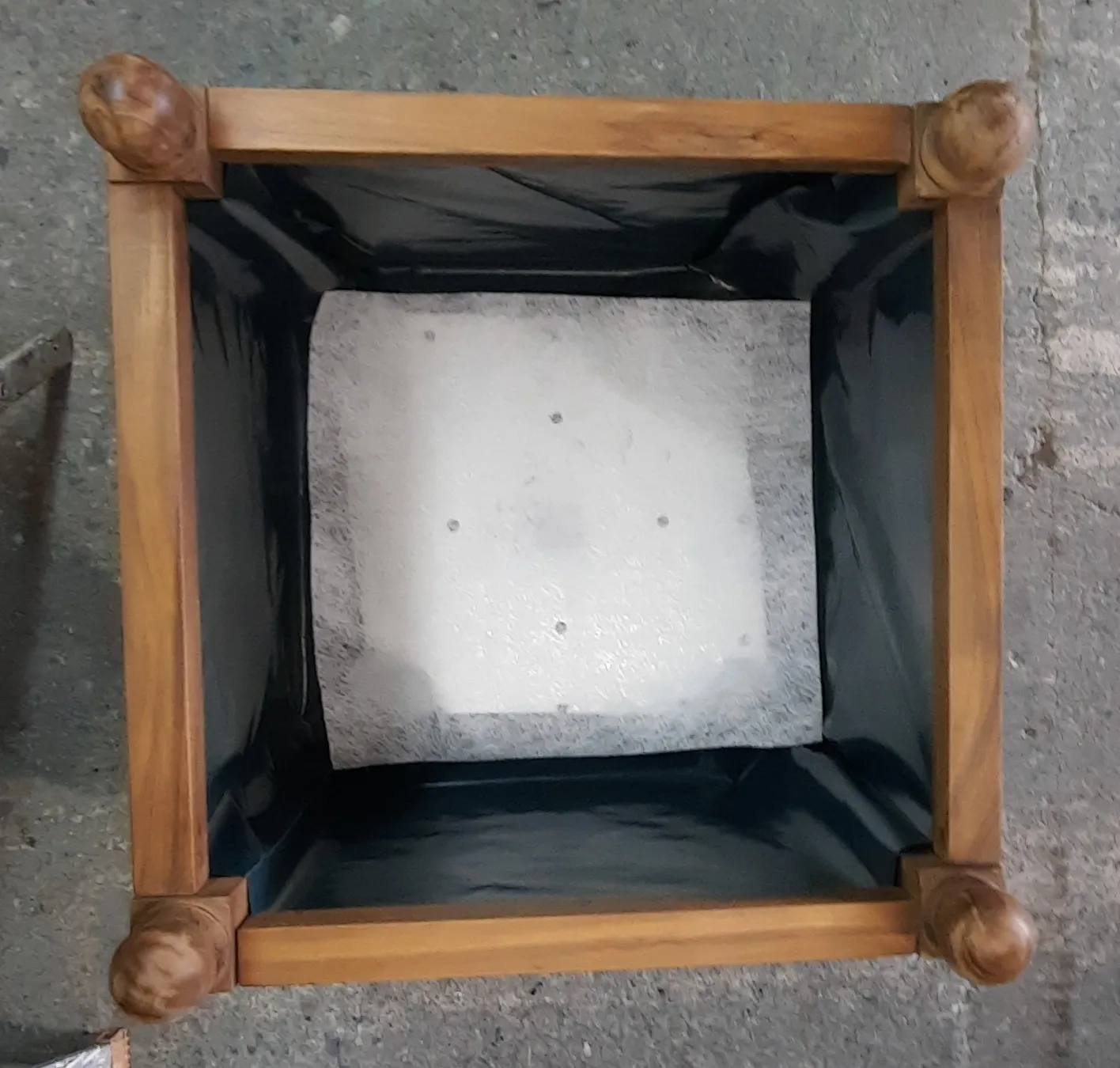
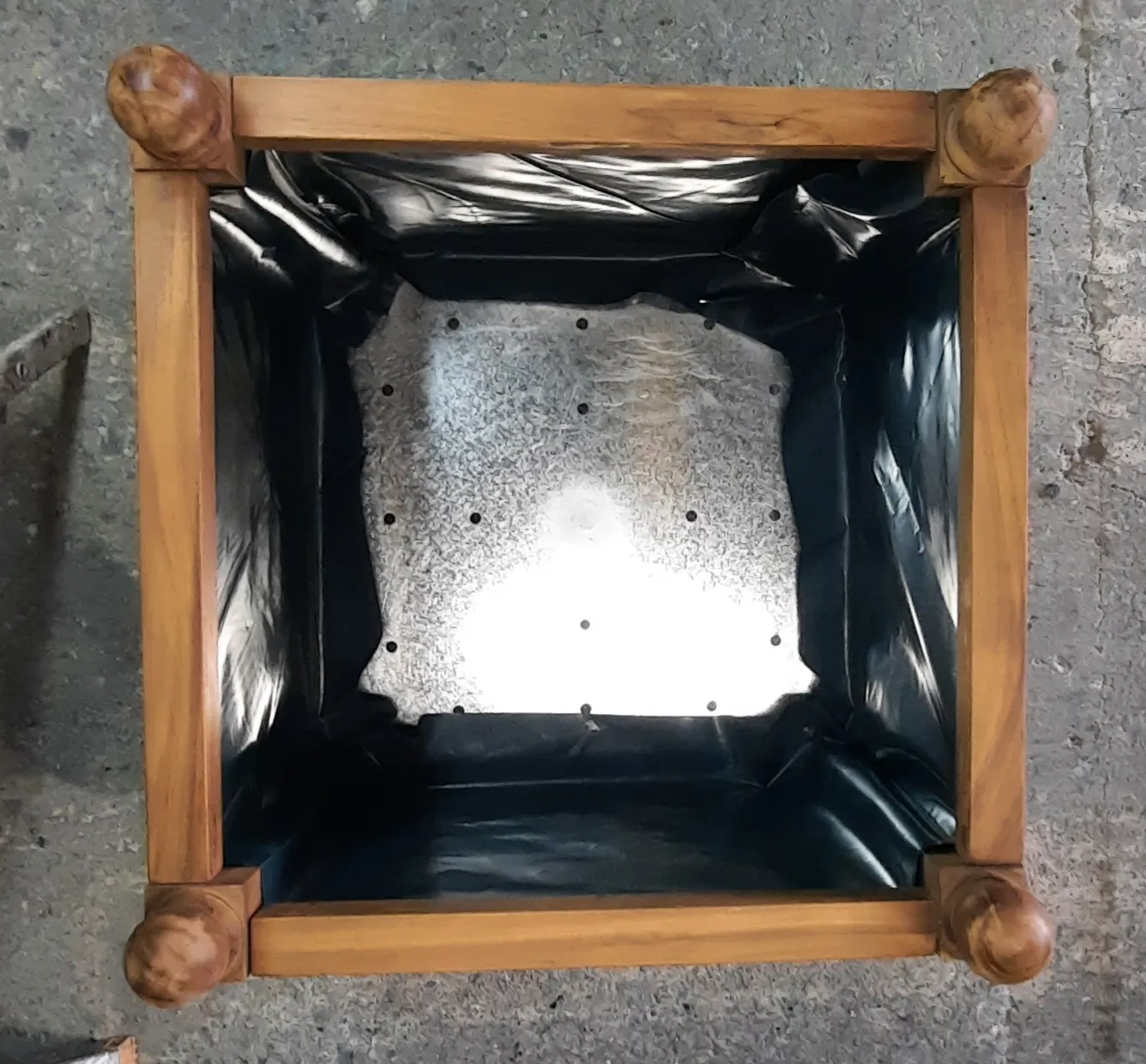
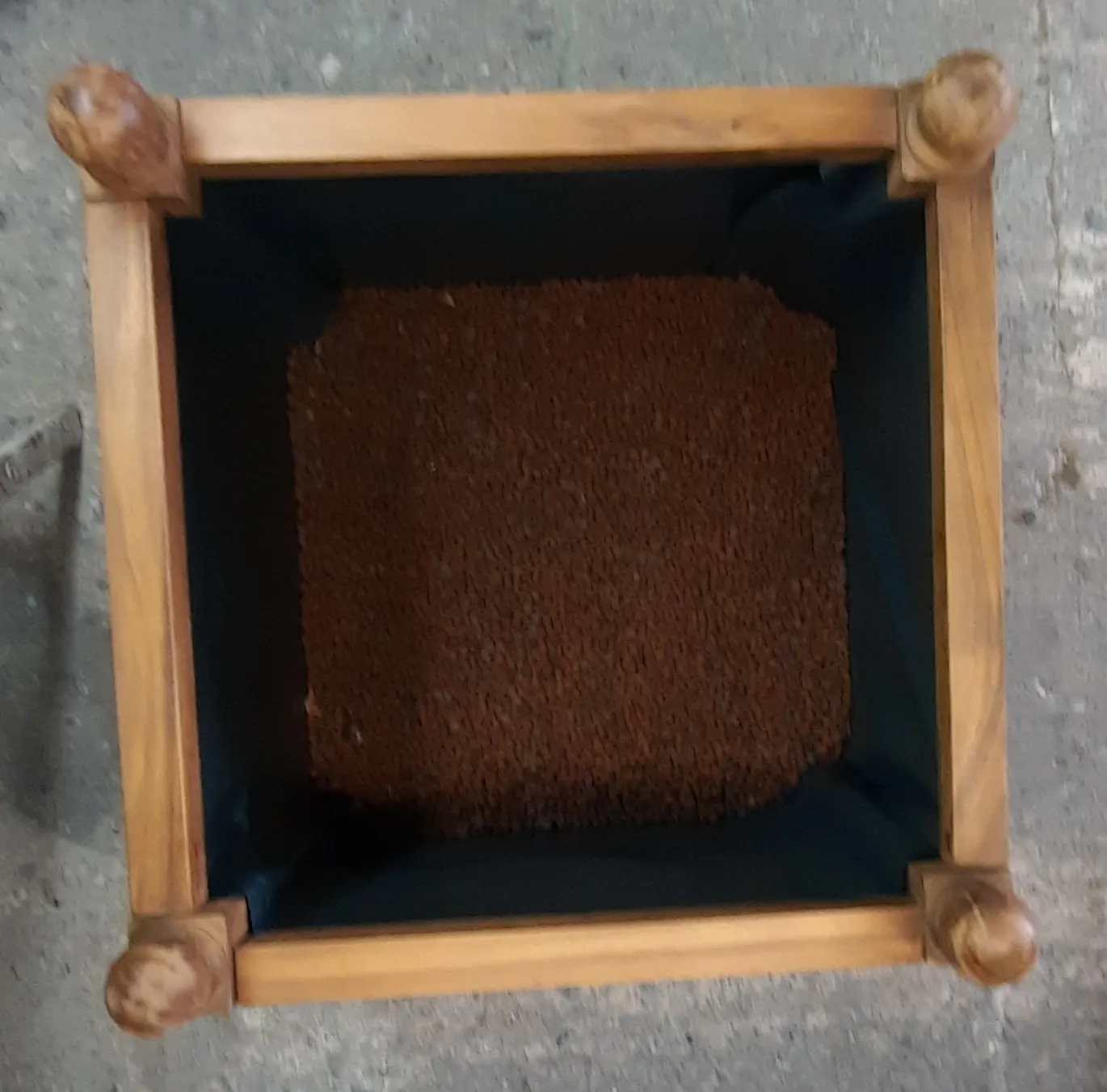
In order to limit micro-cracking due to temperature and humidity variations, to preserve the natural appearance of the wood, it is recommended to apply a coat of special exotic wood saturator as soon as assembly. This treatment must be carried out once a year.
The feet of the planter box must rest on a hard surface. Regarding models with chassis (65×65, 75×75, 95×95 and 120×120, 65×100 and 65×150 cm), we recommend placing a metal plate or a flat stone under each foot of the chassis on soft ground.
The inside of the planter boxes is protected by a layer of diluted tar and so that the soil is not in contact with the wood, a polyethylene sheet. A geotextile sheet is placed at the bottom of the planter box. We recommend placing a 4 to 7 cm layer of clay balls inside the planter box to facilitate drainage. You can then add the appropriate soil for your plant.
A plant develops using the nutrients at its disposal. It is therefore recommended to choose an orangery planter box of a size appropriate to the plant.
When the plant weakens, this means that it no longer finds enough nutrients in the soil present in the orangery planter box. It will become necessary to prune the plant’s roots and provide it with new soil.
Our Plants:
The favorite plants for orangery planter boxes are naturally orange trees, lemon trees and palm trees, but can also be boxwood, yew, laurel, beech, hornbeam, palm, olive tree, topiary ivy or simply a flower bed.
It is also possible to mix trees and flowers: a standard laurel, for example, and flowers at the base that you can renew with the seasons. Working directly with horticulturists, we are able to offer you — with your orangery planter box and your planter — certain suitable shrubs. Do not hesitate to contact us.
🌿 Olive Tree
Tree of the Oleaceae family (Ash, Lilac, Osmanthus, Olive, Privet)
- Origin: Southern Europe, Middle East
- Habitat: Mediterranean climate with long, hot and dry summers, mild winters. Fruit maturation requires a lot of sunshine. Winter rainfall does not bother this robust tree, which must, in summer, receive at least 200 mm of water.
🌳 Boxwood
Boxwood — Buxus sempervirens
- Origin: Europe, North Africa, Western Asia
- Habitat: arid and rocky environments, Mediterranean and subalpine levels of the Alps and Apennines
- Lifespan: about 600 years
- Maximum size: shrub of 5 m
- Growth: very slow
- Habit: irregular ball shape